
Why Barrett Distribution Centers?

BarrettGPT • April 20, 2023

10 Simple Reasons Why Barrett Distribution Centers Should Be Your Next 3PL Provider
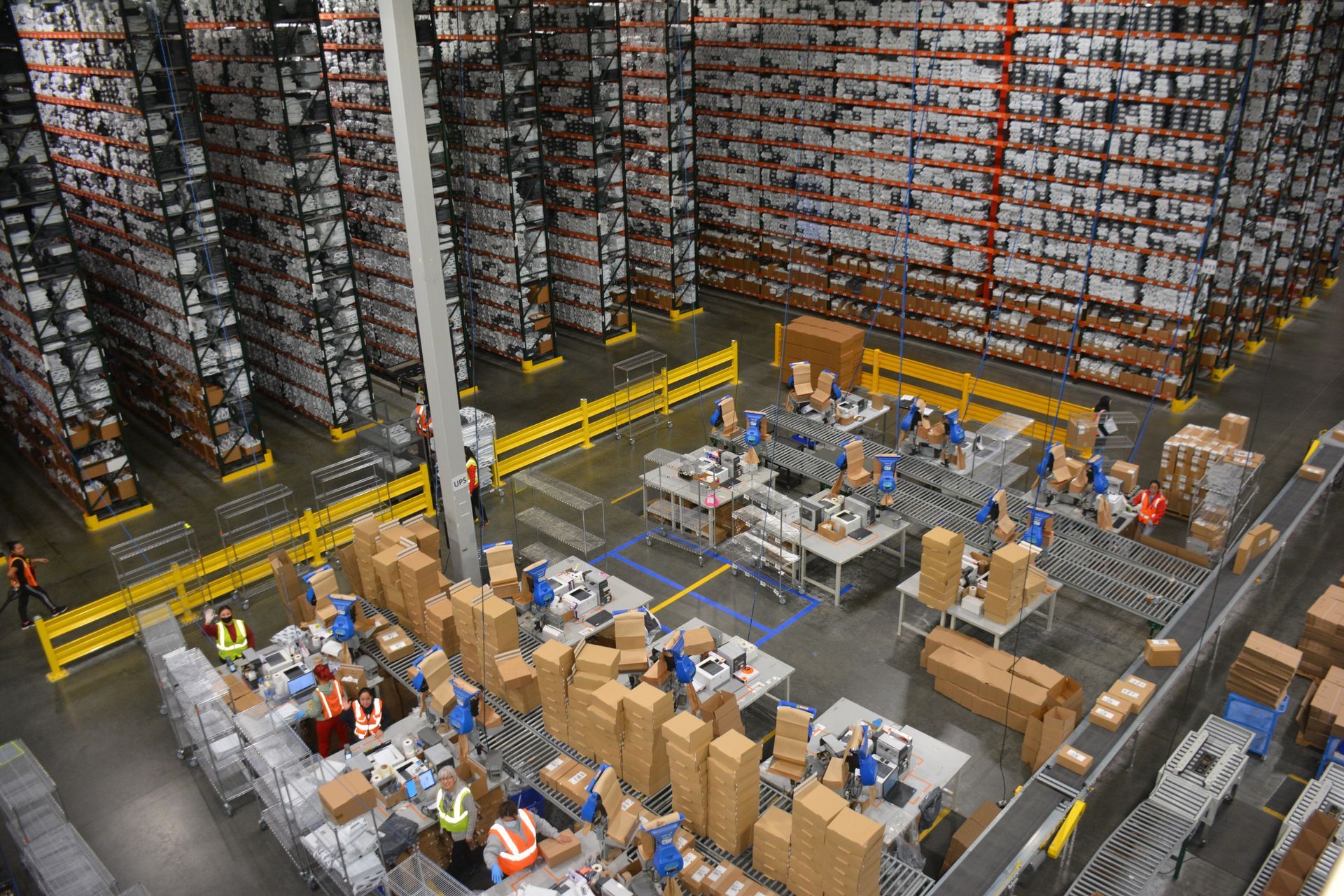
In the rapidly growing world of direct-to-consumer (DTC) e-commerce and omnichannel brands, having an efficient and reliable third-party logistics (3PL) partner is crucial to success. Barrett Distribution Centers stands out from the competition by offering a range of unparalleled services and benefits. In this blog, we will explore 10 reasons why you should choose Barrett as your sole 3PL provider, focusing on topics such as scalability, 24-hour fulfillment, people-driven culture, no red tape, national fulfillment network, advanced robotics, automation technologies, advanced WMS & technology stack, our experience, and our current clients.


1. Scalability:

At Barrett, we understand that your business's growth is of utmost importance. Our scalable solutions ensure that your logistics requirements are met, whether you are a small startup or an established brand. As your business expands, we adapt our services to accommodate your ever-changing needs. For example, when footwear brand experienced rapid growth, we seamlessly scaled our operations over the last 10 years to manage increased order volumes and help maintain its exceptional customer service.


2. 24-hour fulfillment:

In today's fast-paced e-commerce environment, speed is critical. Our 24-hour fulfillment services ensure that your customers receive their orders promptly, enhancing customer satisfaction and brand loyalty. For instance, , a leader in sports merchandise, relies on our expedited fulfillment capabilities during peak seasons like the Super Bowl or the World Series. We help them meet their customers' high expectations by shipping orders within 24 hours, even during high-demand periods.


3. People-driven culture:

We believe that our people are our greatest asset. Our team of skilled and dedicated professionals is committed to providing exceptional service, ensuring that your products are handled with the utmost care and efficiency. For example, , a footwear company specializing in recovery shoes, appreciates our people-driven culture. Our dedicated account managers work closely with Oofos to understand their unique needs, providing personalized solutions that help them succeed in their niche market.


4. No red tape:

Our streamlined processes eliminate unnecessary bureaucracy, enabling us to quickly adapt to your specific needs and respond to changes in the market. , a leading workwear brand, needed a logistics partner that could rapidly respond to fluctuating seasonal demands. Barrett's ability to cut through red tape has allowed to quickly scale their operations up or down based on market conditions, ensuring they always meet customer expectations.


5. National fulfillment network:

Barrett's extensive national fulfillment network (24+ facilities with 6 millions square feet of floor space) allows us to reach your customers quickly and efficiently, regardless of their location. Our strategically placed distribution centers ensure that your products are always close to your end customers, reducing shipping times and costs.


6. Advanced robotics and automation technologies:

By leveraging state-of-the-art robotics and automation technologies, we optimize our warehouse operations, improve accuracy, and minimize human error. This not only increases efficiency but also enables us to pass cost savings onto you. benefits from our advanced robotics as we manage their inventory with a high level of precision, ensuring that orders are fulfilled quickly and accurately, further enhancing their customers' experience.


7. Advanced WMS & technology stack:

Our advanced Warehouse Management System (WMS) and technology stack integrate seamlessly with your existing systems, providing real-time visibility into your inventory and order data. This transparency allows you to make informed decisions and maintain optimal inventory levels. For example, relies on our advanced WMS to keep track of their extensive product catalog, including various sizes, colors, and styles of sports merchandise. This real-time visibility into their inventory helps make data-driven decisions, ensuring that popular items remain in stock and ready to ship to their eager customers.


8. Our experience:

With decades of experience in the logistics industry, we have developed a deep understanding of the unique challenges faced by growing DTC e-commerce and omnichannel brands. We leverage this expertise to design and implement logistics solutions that drive your success. , for example, has been a client for many years. Our long-standing partnership and deep understanding of their business have enabled us to provide customized logistics solutions that support their continued growth in the workwear market.


9. Our current clients:

Barrett is proud to serve an impressive roster of clients, including , , , and . These industry leaders trust us to manage their logistics operations, a testament to our commitment to excellence. Our work with Fanatics illustrates the value of partnering with a trusted 3PL provider. As their business has grown and diversified, we have adapted our services to meet their evolving needs, helping them maintain their position as a leader in sports merchandise.


10. Why Barrett?

In conclusion, choosing Barrett Distribution as your sole 3PL provider is a smart business decision that will help you stay ahead of the competition. Our unparalleled services, advanced technologies, and commitment to client success make us the ideal partner for your growing DTC e-commerce or omnichannel brand.


Discover how Barrett Distribution can transform your logistics operations and drive your business forward. Contact us today to learn more about our comprehensive range of services and explore the many ways in which we can help you reach new heights. Choose Barrett, and experience the difference a trusted logistics partner can make. With our real-world industry examples as a testament to our expertise, you can trust us to deliver exceptional service and support your business's continued growth.

Recent Blog Posts
By Faith Artieda May 15, 2026
For years, the logistics industry has talked about automation as if warehouses will eventually run themselves. Robotics, AI, and warehouse technology have absolutely transformed fulfillment operations — and they will continue to play an important role in the future of supply chains. But despite the headlines, one thing remains true: great warehouse operations still depend on great people.  At Barrett Distribution, technology is designed to support our teams, not replace them. Behind every successful shipment, inventory count, retailer-compliant order, and customer experience is a team of people making critical operational decisions every day. Warehousing Is Still a People Business Automation can improve efficiency, reduce repetitive tasks, and help operations scale. But fulfillment is far more dynamic than many people realize. Every day, warehouse teams are adapting to changing order volumes, retailer requirements, customer expectations, inventory challenges, transportation disruptions, and seasonal spikes. Technology helps create visibility and efficiency, but people are what keep operations moving when conditions change. That human element is especially important in omnichannel fulfillment environments where accuracy, flexibility, and responsiveness matter just as much as speed. The Best Operations Combine Technology and Experience At Barrett, operational excellence comes from combining modern logistics technology with experienced warehouse teams who understand the importance of execution. Our facilities utilize advanced warehouse management systems, transportation systems, robotics, reporting tools, and analytics platforms to improve efficiency and visibility. But technology alone does not create strong customer partnerships or consistent service levels. Experienced team members help drive inventory accuracy, quality control, retailer compliance, process improvement, customer responsiveness, and operational consistency. The most successful logistics operations are built around people who care about the outcome. A Culture Built Around People One of the things that stands out most when visiting Barrett facilities is the culture inside the buildings. During recent visits to several Barrett warehouse locations, one thing became immediately clear: the people are the foundation of the operation. Teams take pride in their work, support each other, and genuinely care about the customers and brands they serve. In many facilities, Barrett has employees and families who have worked with the company across multiple generations. That kind of long-term commitment says a lot about the culture that has been built over decades. Warehousing can often be viewed as transactional from the outside, but the reality is much different. Strong operations are built by people who show up every day with experience, accountability, and a shared commitment to getting the job done the right way. Automation Should Support Employees — Not Replace Them The future of logistics will absolutely include more automation and technology. But the goal should not be removing people from operations entirely. The best warehouse technology allows employees to work more efficiently, reduce unnecessary movement, improve accuracy, prioritize higher-value tasks, and make faster operational decisions. At Barrett, technology investments are focused on empowering teams and improving customer outcomes while maintaining the people-first culture that has helped drive long-term growth and customer relationships. The Human Side of Fulfillment Still Matters In an industry increasingly focused on speed and automation, it is easy to overlook the people behind the operation. But successful fulfillment still depends on communication, accountability, problem-solving, and operational experience. That human side of logistics is what allows strong warehouse operations to adapt, improve, and consistently deliver for customers. At Barrett Distribution, the combination of experienced people, operational discipline, and technology-enabled fulfillment continues to be a key differentiator — because even in a highly automated world, supply chains still run on people.
By Faith Artieda May 12, 2026
The Growing Challenge of Food Supply Chains The food and beverage supply chain has become increasingly difficult to manage. Brands are navigating rising transportation costs, shifting consumer demand, retail compliance requirements, and ongoing disruptions across ports and carrier networks. For many companies, reducing supply chain risk now starts with warehouse strategy. One of the most effective ways food brands can improve resiliency is by positioning inventory closer to major East Coast ports and consumer markets. Strategic warehousing allows companies to move products through the supply chain faster while improving visibility, reducing delays, and creating greater flexibility across retail and ecommerce channels. Why Port Proximity Matters For import-heavy brands, proximity to East Coast ports can have a major operational impact. Facilities located near ports like Baltimore allow inventory to move from container to distribution more efficiently. This helps brands reduce drayage costs, improve inventory availability, shorten replenishment timelines, and respond faster to changing demand. By reducing the distance between inbound freight and final distribution, brands can create a more agile and responsive supply chain. Faster Access to East Coast Consumers East Coast warehousing also provides access to some of the largest consumer populations in the country. Strategically positioning inventory closer to customers helps brands improve parcel transit times, support retailer distribution requirements, lower transportation spend, and improve the overall customer experience. As delivery expectations continue to rise, warehouse location plays a larger role in both customer satisfaction and operational efficiency. The Importance of Food-Grade Warehousing For food brands specifically, facility standards and inventory controls are critical. Food-grade warehousing requires more than storage capacity. Companies need strong operational processes to maintain product integrity and compliance throughout the supply chain. Key capabilities food brands should prioritize include: Lot tracking and expiration date management Strong inventory accuracy controls Retail compliance expertise Omnichannel fulfillment capabilities Strong inventory controls help reduce spoilage risk, improve traceability, and maintain service levels across all sales channels. Managing Omnichannel Fulfillment Complexity Many food and beverage companies now support a mix of retail distribution, Amazon replenishment, direct-to-consumer fulfillment, and wholesale operations simultaneously. Managing these channels efficiently requires flexible infrastructure and integrated systems that support both B2B and DTC operations. As brands grow, fulfillment partners must be able to scale operations while maintaining accuracy, compliance, and visibility across the supply chain. Technology and Visibility Reduce Risk Technology also plays a significant role in reducing supply chain risk. Real-time visibility gives brands the ability to make faster operational decisions and identify issues before they impact customers. Modern logistics technology should provide: Real-time inventory visibility Order and shipment tracking KPI reporting and analytics With better visibility into inventory and fulfillment performance, brands can operate more proactively and reduce costly disruptions. Building a More Resilient Supply Chain At Barrett Distribution, food and beverage brands benefit from strategically located East Coast warehousing, food-grade operational standards, omnichannel fulfillment expertise, and technology-enabled visibility tools designed to support scalable growth. Barrett’s Curtis Bay, Maryland facility, located near the Port of Baltimore, supports consumer products and food brands with strong inventory controls, retail compliance capabilities, and integrated fulfillment operations.  While supply chain disruptions may continue to evolve, brands that invest in strategic warehousing and operational flexibility will be better positioned to improve service levels, reduce transportation challenges, and build more resilient supply chains for long-term growth.
By Faith Artieda May 11, 2026
How Beauty Brands Avoid Expiration Risk (and Costly Retail Chargebacks)
More Posts