







Related Content

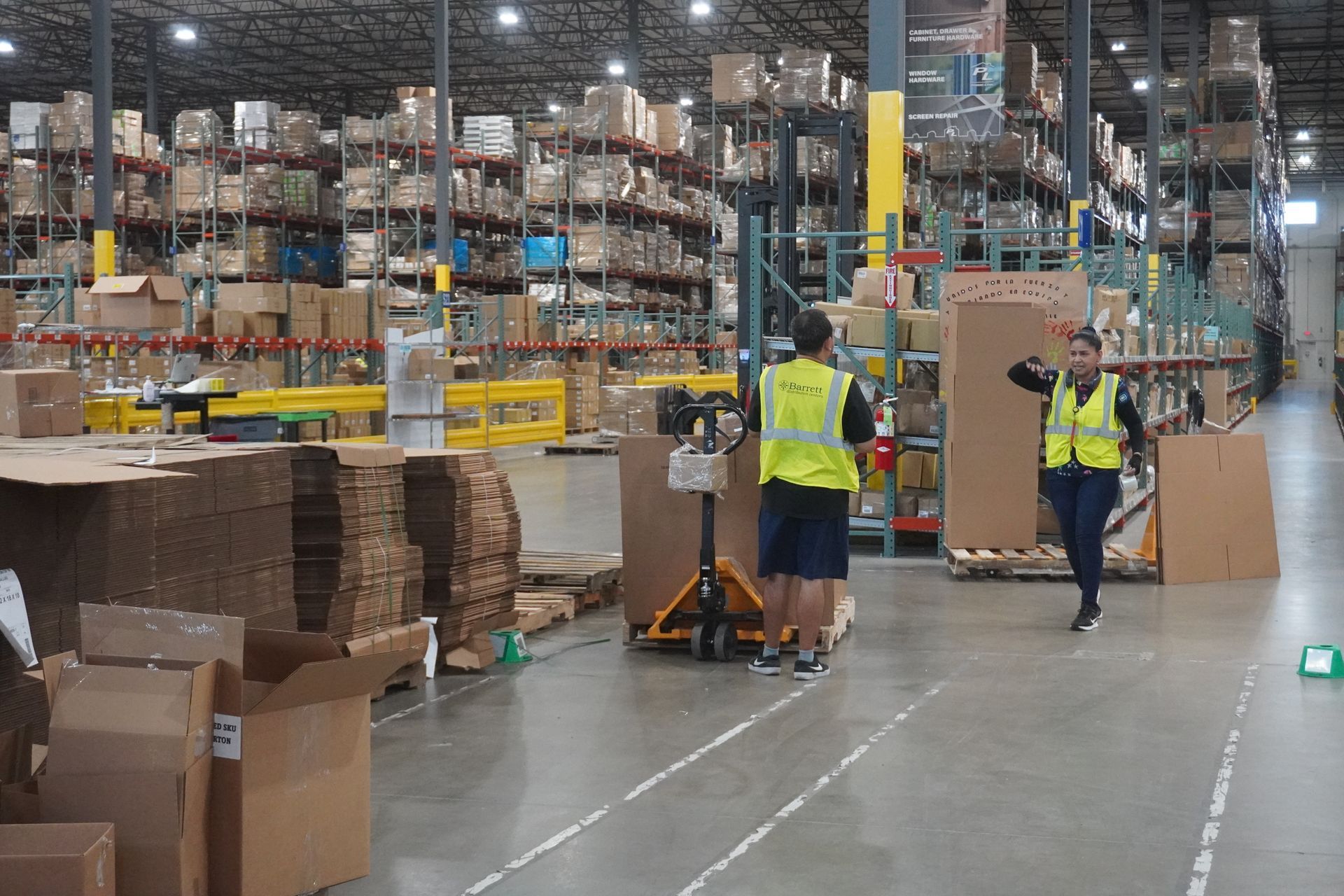
Choosing a 3PL often begins with a salesperson, a proposal, and a long list of capabilities. There are conversations about locations, technology, pricing, order volume, integrations, and everything your business might need as it grows. Those conversations are important, but they introduce you to only one part of the company you may eventually trust with your products and your customers. Once inventory arrives, the relationship becomes much bigger. There are general managers overseeing the facility, operations teams making decisions every day, systems experts supporting technology, and employees receiving, picking, packing, and shipping your products. These are the people who will learn the nuances of your business and work through the unexpected moments that inevitably come with growth. Bryan Corbett understands that distinction from both sides of the relationship. Before joining Barrett Distribution Centers, Bryan spent years as an entrepreneur running businesses that managed their own warehousing and fulfillment. He remembers unloading trucks with pallet jacks, operating his own warehouse, managing picking, and building fulfillment processes firsthand. After roughly 15 years as an entrepreneur, he moved into contract logistics, eventually joining Barrett, where he now works across sales and marketing. At the time of the conversation, Bryan had been with Barrett for about four and a half years. That operating background influences the way he approaches sales today. He knows that the person presenting the solution is only one piece of a much larger relationship. “You want to meet a good set of experts from every team because this is your supply chain. This is your company,” Bryan explained. And when you think about what a brand is actually handing over to a 3PL, that point becomes difficult to ignore. Get Beyond the Sales Conversation There is nothing wrong with having a great salesperson. That person can become an important advocate for your business and a valuable part of the relationship. But the salesperson will not be the only person responsible for delivering what was promised. Bryan is a salesperson himself, and he is remarkably straightforward about that reality. “I’m a salesperson,” he said. “So I need to know I can’t just say because I know operations.” His approach is to bring other Barrett experts into the conversation so prospective customers can hear directly from the people who understand different parts of the business. When asked about potential red flags brands should watch for when selecting a fulfillment provider, one of the first things Bryan mentioned was “not being encouraged to broadly meet larger teams besides the sales guy.” That is an important distinction because a polished sales presentation can tell you what a company is capable of doing. Meeting the people behind that presentation can help you understand what working with the company might actually feel like. Before choosing a 3PL, brands should have opportunities to: Meet facility leadership and understand who will ultimately be responsible for the building where their products are handled. Talk with operations teams about the realities and unique requirements of their business. Understand the systems support available when technology, integrations, or data questions arise. Walk the warehouse and see the environment where their inventory could eventually live. Ask who will be involved when something unexpected happens and how communication will work. Pay attention to the people and culture because those relationships will matter long after the proposal is signed. You are not trying to collect another round of rehearsed answers. You are trying to understand whether the expertise promised during the sales process actually exists throughout the organization. Walk the Building Before Your Inventory Does Bryan also believes brands should see the operation for themselves. When discussing red flags, he specifically mentioned “not doing site” visits alongside receiving prices too quickly and failing to meet the broader operations team. A warehouse tour gives a brand something a presentation cannot fully recreate. You can see how the facility operates, watch how people interact, ask questions in the environment where the work actually happens, and begin meeting the people who could eventually become responsible for your business. Bryan shared a piece of advice from a former colleague that has stayed with him: “You’re only as good as the GM in your building.” The point is not that buildings, systems, and technology are unimportant. They matter tremendously. But ultimately, people still make decisions, solve problems, communicate with customers, and determine how well those resources are used. Bryan sees that same principle within Barrett. When talking about what he enjoys most about the company, he repeatedly returns to the people around him. “Work should be fun,” he said. “You should be able to be yourself, have an opinion, have a view, have a point of view.” That sense of openness matters externally too, especially when a customer needs an answer that is more complicated than yes. A Good Partner Will Not Always Tell You What You Want to Hear One of the more revealing things Bryan says in the conversation has nothing to do with warehouse size, technology, or shipping speed. “We’ll tell you if you don’t need us.” For a sales leader, that is a meaningful statement. Bryan explains that Barrett says no to business when the fit is not right. Sometimes a company may not need a 3PL yet. Sometimes another provider may be better suited to what the business requires. For Bryan, forcing a relationship simply to win the business undermines the trust that a long term partnership eventually requires. “You show your expertise through your honesty and your trustworthiness. You can’t separate the two,” he said. That philosophy also means accepting that neither side will be perfect. Bryan is candid about mistakes and the realities of long term customer relationships. “Sometimes the customer’s not always right. And sometimes Barrett’s not always right. Sometimes we make mistakes.” The goal is not to pretend problems will never occur. It is to create enough trust between the people involved that when something does happen, everyone can communicate honestly, respond quickly, and work toward the same outcome. You Cannot Fake a Partnership The word partner appears constantly in the 3PL industry. Bryan believes the relationship behind that word has to be genuine. “You can’t fake it.” He talks about developing relationships with customers over months and years, learning about their companies, understanding what matters to their teams, and eventually reaching a point where the relationship becomes much more personal than inventory sitting inside a warehouse. That same philosophy influences the way Barrett talks about its customers publicly. Rather than making every story about Barrett, Bryan believes some of the strongest marketing comes from elevating the brands Barrett serves and allowing their success to speak for the relationship. He has seen something similar happen inside the warehouse. “I’ve seen our operators develop next level relationships with the clients,” Bryan said, explaining that those connections help “humanize the relationship.” The products stop being anonymous units moving through a building. There are people behind them. There is a business trying to grow, employees depending on its success, customers waiting for their orders, and a reputation attached to every package that leaves the facility. That understanding can change the way people approach the work. Meet the People Behind the Promise A 3PL can have impressive buildings, sophisticated technology, competitive pricing, and an extensive list of capabilities. Those things deserve careful consideration. But you are ultimately trusting people to use them well. Bryan perhaps summarizes that idea best when he talks about what successful sales relationships require: “People don’t buy from fake. You can’t speak like a robot. You have to know what you’re talking about. You have to be a human being.” Before choosing a 3PL, meet those human beings. Walk the facility. Meet the general manager. Talk with operations. Ask questions that go beyond pricing and square footage. Find out who will answer the phone when something unexpected happens and whether the people in the building understand what your products represent to your business. Because once the sales process is over, those are the people who will help turn the promises in the proposal into your customer's everyday experience.

FRANKLIN, Mass., July 29, 2026 — Barrett Distribution Centers, a trusted third-party logistics (3PL) provider specializing in omnichannel fulfillment, announced a new partnership with Kindthread , a leading healthcare apparel company known for its portfolio of trusted medical scrub and workwear brands. "Finding the right fulfillment partner was one of the most important decisions we had to make," said Jamie Bailey , senior director of logistics at Kindthread. "From our first conversations, Barrett showed they understood our business and the complexity of supporting both wholesale and direct-to-consumer fulfillment. Their team was responsive, easy to work with and focused on finding solutions every step of the way. That gave us confidence we had the right partner for this transition." Kindthread selected Barrett to rapidly transition its B2B, retail, and direct-to-consumer fulfillment operations from Mexico to the U.S. following changes to Section 321 de minimis regulations. Leveraging its Olive Branch, Tennessee campus and a fast-track implementation approach, Barrett onboarded more than 100 truckloads of inventory and launched custom embroidery services to support personalized orders. "Kindthread has an aggressive growth strategy that aligns extremely well with Barrett's capabilities and long-term vision," said Scott Wilkins , vice president of customer solutions. "Given the short implementation window, establishing trust and maintaining clear communication from the very beginning was critical. Both organizations worked tirelessly to meet key milestones while minimizing disruption to Kindthread's customers. We sincerely appreciate the confidence Kindthread placed in Barrett and look forward to building a successful partnership for many years to come." The partnership positions Kindthread for continued growth while providing the operational flexibility needed to support evolving customer demand across multiple sales channels. About Kindthread At Kindthread, we don’t just make scrubs; we make your new favorite uniform. Every stitch, seam, and pocket has a job to do, and they take it seriously. From fabrics that move with you to thoughtful features that make those long shifts feel a little lighter, we’ve got your back (and front). Carefully crafted for the folks who give their all to care for others, blending innovative design, durability, and comfort into pieces that won't let you down. About Barrett Distribution Centers Since 1941, Barrett has provided customized third-party logistics (3PL), direct-to-consumer (DTC) eCommerce fulfillment, omnichannel distribution, managed transportation solutions and retail compliance for clients across all industries, with a focus on apparel & footwear, health & beauty, consumer packaged goods (CPG) and education. Barrett continues to be a leading 3rd party logistics provider in North America, known for superior execution, customer engagement and direct access to senior leadership decision makers. As a member of Inc's fastest growing companies list 15+ times, Barrett is big enough to do the job and still small enough to deeply care about your business. Brands interested in a new 3PL partnership may contact Barrett directly here . Media Contact: Faith Artieda Marketing Content Specialist faith.artieda@barrettdistribution.com

At first glance, choosing a 3PL can seem like a search for space. You have inventory that needs somewhere to go, orders that need to leave on time, and customers waiting on the other side. But nearly every warehouse can store a pallet. The more important question is what happens after your inventory arrives. As a brand grows, fulfillment becomes increasingly connected to the experience customers have with the business. Orders become more complex, new sales channels emerge, retail opportunities appear, and expectations continue to rise. Suddenly, simply having enough warehouse space is no longer the standard. You need a partner that understands what your brand is trying to accomplish and has the experience to support where it is going next. That distinction is something Scott Wilkins emphasizes when talking with brands evaluating a 3PL. One of the simplest questions he recommends asking a potential provider is also one of the most revealing: “Tell me about some of the customers that are like me.” The answer can tell you much more than how many square feet are available. Experience Should Look Familiar Every brand has its own story, but you should not want your 3PL to encounter every challenge for the first time alongside you. If you are an apparel company, does the provider understand the nuances that come with apparel fulfillment? If your business is moving from direct to consumer sales into major retail, has the 3PL helped other brands make that transition? If Walmart suddenly places a substantial purchase order, will your fulfillment team understand what comes next? Scott encourages brands to dig into those examples rather than simply accepting a list of capabilities. Ask about customers with similar businesses. Ask what challenges those companies encountered. Ask how the 3PL approached those problems and what your own team should understand before entering a new channel. There is reassurance in discovering that the situation keeping your team awake at night is something your partner has already seen before. As Scott explained, “We're as much consultants to a lot of these companies as a fulfillment and 3PL and warehouse provider.” That is a meaningful distinction. A warehouse responds to what arrives. A partner helps you think about what might be coming next. Your Brand Does Not Stop at the Warehouse Door Customers will probably never know where their order was stored, who picked it, or how many steps were required to get it to their doorstep. They will simply know whether the experience felt right. That is why fulfillment should reflect the standards a brand has established everywhere else. The right product matters, but so does how it is presented. Custom packaging, branded inserts, gift messaging, kitting, and other details can turn an ordinary shipment into something that feels unmistakably connected to the company that sent it. The same principle applies beyond ecommerce. Retailers have their own requirements, marketplaces introduce different expectations, and wholesale orders can look completely different from the packages heading to individual consumers. A 3PL supporting all of those channels has to understand that the inventory may be the same, but the expectations surrounding it are not. Look Beyond the Basics Warehouse space, shipping capabilities, technology, and pricing deserve a place in any 3PL conversation. They simply should not be the entire conversation. When evaluating whether a provider can truly support your brand, consider questions such as: Have they supported brands with needs similar to yours? Can they accommodate both your current business and the channels you plan to enter? Will they take the time to understand how you want your products handled and presented? Can they adapt when an unexpected retailer order, promotion, or surge in demand changes the plan? Will you have experienced people to turn to when something unfamiliar happens? Are they thinking about the customer receiving the order, not simply the package leaving the building? These questions shift the conversation away from what a 3PL owns and toward what it can actually contribute to the business. What Happens When the Business Changes? The fulfillment arrangement that works today may not be the one your brand needs several years from now. Perhaps you are primarily selling through your own website today, but retail is becoming part of the conversation. Maybe marketplaces are growing quickly. A product could take off unexpectedly, or a retailer could place an order much larger than anything your team has handled before. Scott has seen brands encounter exactly those moments. “There’s been more than a number of examples where we get a phone call like one of their sales guys just landed a huge PO with Walmart and they're like, ‘My gosh, how are we gonna handle this?’” The response brands want to hear in that situation is not uncertainty. “We got you. Like we'll walk you through it, we'll tell you how to handle it.” That confidence comes from experience. It also illustrates the difference between having somewhere to store inventory and having a team capable of helping your business navigate what happens when growth becomes real. Find the Partner That Can Grow With the Story Scott describes the idea of brands finding a “forever 3PL,” one they do not have to replace every time the business reaches another stage. That does not mean predicting every challenge your company will encounter. Few brands know exactly what their business will look like several years from now. It means choosing a partner with enough experience, flexibility, and curiosity to evolve alongside you. Because your inventory is not just inventory. It represents products your team designed, customers you worked to earn, retailer relationships you spent years pursuing, and a reputation that has taken time to build. Finding somewhere to put it is the easy part. Finding a partner that understands what it represents is what really matters.

For a growing brand, there are certain moments that make all the work behind the scenes feel worth it. Landing a major retailer is one of them. Maybe the business started with a small collection of products and a loyal group of customers ordering directly from the website. Over time, those orders became more consistent. The audience grew. More people started recognizing the name, and conversations that once felt aspirational began turning into real opportunities. Then comes the email, the meeting, or the purchase order your team has been working toward. A major retailer wants your product. It is the kind of news that deserves to be celebrated. It is also the kind of news that can transform the business almost overnight. Suddenly, the operation that has been comfortably supporting your direct to consumer business is being asked to do something very different. Instead of preparing individual orders for customers, you may be looking at cases or pallets containing thousands of units. Inventory that once supported one primary sales channel now has to stretch across several. New requirements enter the conversation, and the margin for error becomes smaller because the size of the opportunity has become considerably larger. Scott Wilkins, Senior Vice President of Customer 91¹ú²ú at Barrett Distribution Centers, has spent 14 years with Barrett and has watched brands reach this exact point in their growth. In some cases, the shift happens faster than anyone anticipated. A sales team lands the retailer it has been pursuing, the excitement spreads throughout the company, and then someone asks the question that brings everyone back to reality: How are we actually going to handle this? Retail Changes the Rhythm of Your Business Direct to consumer fulfillment can become familiar over time. An order comes through a website or marketplace, a few products are picked and packed, and the package travels directly to someone's home. Retail operates differently. Orders may move by the case or pallet rather than as individual packages. Products might be headed to a retailer's distribution center or directly to stores. Inventory requirements can change, and retailers often have their own expectations surrounding how products are prepared and delivered. Then there is the sheer size of the opportunity. As Scott explained, “A PO to Walmart could be tens of thousands of units, right? Hundreds of thousands of dollars.” That kind of order can propel a brand forward quickly, but it also raises the stakes. Scott points to retailer requirements and chargebacks as areas where brands need to be particularly careful. “Brands can get into trouble really, really quickly if they don't really have a 3PL partner that can handle everything that a retailer is gonna throw at them.” For brands making this transition, a few areas deserve particular attention: Retailer requirements: Every retailer operates a little differently, and understanding those expectations before orders begin moving can prevent expensive mistakes. Inventory planning: A large retail order can consume inventory quickly, especially when ecommerce customers are still ordering from the same product assortment. Order profiles: Shipping individual packages to consumers is very different from preparing cases or pallets for stores and distribution centers. Retail compliance: Labeling, routing, documentation, packaging, and delivery requirements become increasingly important as larger retailers enter the picture. Room for what comes next: One successful retail relationship can quickly lead to another. Your fulfillment operation should be prepared for the business to continue evolving. None of these considerations make landing a retailer any less exciting. They simply illustrate why the fulfillment conversation changes as the opportunity gets bigger. Has Your 3PL Done This Before? When a brand begins evaluating whether its current fulfillment operation can support retail growth, the number of questions can quickly become overwhelming. Technology, locations, capacity, pricing, systems, and capabilities all deserve consideration. Scott recommends starting with something much simpler: “Tell me about some of the customers that are like me.” It is a straightforward question, but the answer can reveal quite a bit about the experience sitting across the table from you. If you are an apparel brand preparing to enter mass retail, has the 3PL supported similar apparel companies? If Walmart is part of your future, does the provider already understand what fulfilling Walmart orders involves? What challenges have similar brands encountered, and what did the 3PL learn from helping them through those situations? More importantly, Scott encourages brands to understand what their own teams need to be prepared for when entering these relationships. A strong 3PL should not simply tell you what it can do. It should help you understand what successful growth will require from your business as well. That is where experience begins to feel less like a credential and more like a resource. “We're as much consultants to a lot of these companies as a fulfillment and 3PL and warehouse provider,” Scott said. “We're solving problems every single day.” When your company is entering unfamiliar territory, having people around the business who have already encountered similar situations can make that next step considerably less daunting. Sometimes Growth Arrives Before You Feel Ready There is a funny thing about growth. Companies spend years pursuing it, but the biggest opportunities rarely arrive at the perfect moment. A sales team lands the account everyone has been chasing. The purchase order comes through. Everyone celebrates. Then someone eventually asks the practical question: How are we going to handle this? Scott has seen that exact scenario play out. “There’s been more than a number of examples where we get a phone call like one of their sales guys just landed a huge PO with Walmart and they're like, ‘My gosh, how are we gonna handle this?’” For Scott and the Barrett team, the response comes from having navigated those situations before. “We got you. Like we'll walk you through it, we'll tell you how to handle it.” There is something reassuring about those words because they capture what a strong fulfillment relationship should provide during a period of change. Your 3PL should not become another problem your team has to solve when a major opportunity arrives. It should be one of the reasons your team feels prepared to pursue that opportunity in the first place. That does not mean every transition will be effortless. Retail introduces complexity, and every brand has its own requirements. What matters is having experienced people who can recognize potential complications early and help your team work through them before they grow into larger problems. The First Retailer May Only Be the Beginning A brand rarely grows in a perfectly straight line. A company might begin by selling exclusively through its own website before adding marketplaces, retail, wholesale, or other channels. One retailer may become several, while the ecommerce side of the business continues growing at the same time. Scott has watched Barrett evolve alongside brands making exactly that transition. What was once a more traditional warehousing business has expanded into a broader omnichannel model capable of supporting direct to consumer orders alongside the very different demands of retail. The idea is to give brands room to grow without forcing them to rethink their fulfillment relationship every time the business reaches another milestone. Scott refers to this as finding a “forever 3PL.” Brands, he explained, “don't wanna start somewhere and then have to find a new 3PL as their business grows and it changes.” That perspective becomes especially relevant after landing a major retailer. The immediate purchase order deserves attention, but so does what might follow it. If another retailer comes calling six months from now, the fulfillment foundation should make that conversation easier, not more intimidating. Be Ready for What Comes Next Landing a major retailer is validation that something is working. Your product has earned attention, new customers are within reach, and the business is stepping into a larger arena. Your fulfillment operation should give you the confidence to enjoy that moment rather than immediately wonder whether you can keep up with it. Scott describes Barrett's role in this stage as helping brands navigate “that switch or that evolution or that level up” as they become more sophisticated omnichannel businesses. That is ultimately what the right fulfillment relationship should make possible. It is not simply about getting one enormous purchase order out the door. It is about creating a foundation that can accommodate the opportunities that follow without losing sight of the customers who helped the brand get there in the first place. So celebrate landing the retailer. It is a big deal. Then make sure your business is ready when the next one calls.