
What Should Be in an SLA for Order Fulfillment?
Katherine Wroth • June 26, 2024

At Barrett Distribution Centers, we know that not all SLAs are created equal. When partnering with a 3PL provider for order fulfillment services, a well-designed Service Level Agreement (SLA) is your blueprint for success. A strong SLA sets the stage for a productive and transparent relationship, ensuring both parties understand their roles and responsibilities. It also serves as a benchmark for evaluating the performance and effectiveness of the 3PL provider, promoting continuous improvement and accountability.


What exactly is a Service Level Agreement (SLA)?


A Service Level Agreement (SLA) ensures that all parties involved in order fulfillment are on the same page. An SLA is a formal contract between the 3PL provider and a client that outlines the specific services expected, the standards to be maintained and the metrics for measuring performance. At Barrett, we pride ourselves on providing personalized logistics solutions; having a well-defined SLA is key to maintaining trust and client satisfaction.


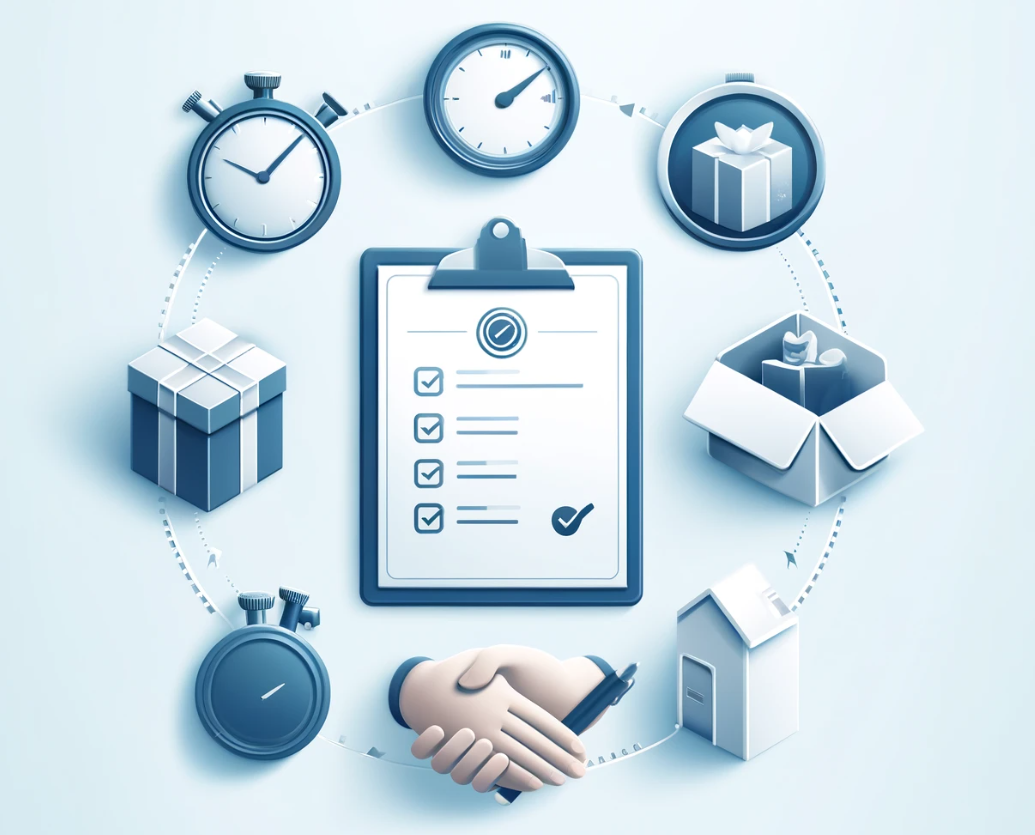
Here’s a comprehensive guide on what should be included in an SLA for order fulfillment:


  • Service Description: The first element of an SLA is a clear and detailed description of the services provided. This should cover all aspects of order fulfillment, including receiving orders, processing, picking and packing, shipping and handling returns. It should specify the scope of services and any limitations. This clarity helps set the right expectations and ensures there are no ambiguities.


  • Performance Metrics: Performance metrics are the backbone of any SLA. They define how the 3PL provider’s performance will be measured and reported. For order fulfillment, common metrics include:
  • Order Accuracy: The percentage of orders correctly fulfilled without errors.
  • On-time Delivery: The percentage of orders delivered within the agreed timeframe.
  • Inventory Accuracy: The accuracy of stock levels as reported in the inventory management system.
  • Return Processing Time: The time taken to process returned items and update inventory.


  • Responsibilities of Each Party: An SLA should clearly delineate the responsibilities of both the 3PL provider and the client. The 3PL provider's responsibilities may include ensuring timely order processing, maintaining accurate inventory records and providing regular performance reports. The client’s responsibilities may include providing accurate order information, timely payments and adhering to agreed-upon procedures for returns and disputes.


  • Issue Resolution and Escalation Procedures: Despite the best efforts, issues can arise. An SLA should include detailed procedures for resolving problems and escalating unresolved issues. This section should outline the steps to be taken during service failures, including who to contact, the timeframe for resolution, and how issues will be documented and reported. A clear escalation path helps quickly address and mitigate issues before significantly impacting the business.


  • Service Availability and Support: This section should specify the availability of services and support. For example, it should detail the operating hours, availability of customer support and any provisions for after-hours or emergency support. This ensures clients know when to expect assistance and what support is available.


  • Compliance and Security Standards: Order fulfillment often involves handling sensitive information, such as customer and payment information. The SLA should outline the compliance and security standards to which the 3PL provider will adhere. This may include compliance with regulations like GDPR or CCPA, data protection and cybersecurity standards.


  • Performance Reporting: Regular performance reporting is crucial for transparency and accountability. The SLA should specify the frequency and format of performance reports. These reports should provide insights into key metrics, any service issues encountered and steps taken to resolve them. This helps maintain a transparent relationship and enables continuous improvement.


  • Penalties and Incentives: To ensure adherence to the SLA, it’s common to include penalties for non-compliance and incentives for exceeding performance expectations. Penalties might include financial compensation for missed targets, while incentives could be bonuses for consistently meeting or exceeding service levels.


  • Managing Capacity for Growing E-commerce Businesses: Many of our e-commerce clients are experiencing significant growth. Are you prepared to manage new markets and increase sales? When collaborating with your 3PL partner, it’s essential to consider how rising order volumes will affect your SLAs. Understanding your 3PL’s ability to scale alongside your growth while maintaining your brand promise is critical in your decision-making process.


Leveraging 80+ Years of Expertise to Enhance Your Customer Experience


With over 80 years of experience serving clients nationwide, we are well-equipped to provide the exceptional customer experience you need to help scale your business. Our extensive network of order fulfillment centers, Barrett experts, efficient processes and advanced technology ensure that we consistently meet your SLA requirements daily.


To learn more about our personalized 3PL solutions, contact us today.

Recent Blog Posts
By Faith Artieda July 15, 2026
As businesses grow, managing warehousing, inventory, transportation, and order fulfillment becomes increasingly complex. Rather than investing in additional warehouse space, hiring more employees, or managing multiple shipping carriers, many companies partner with a third-party logistics provider, commonly known as a 3PL. But what exactly does a 3PL do, and how can it benefit your business? What Is a 3PL? A third-party logistics provider is a company that manages all or part of a business's supply chain operations. Instead of handling logistics in-house, businesses outsource services like warehousing, inventory management, order fulfillment, transportation, and returns to a trusted logistics partner. A 3PL acts as an extension of your business, helping move products from suppliers to customers as efficiently and accurately as possible. What Services Does a 3PL Provide? While every provider offers different capabilities, most 3PLs deliver a combination of services that simplify supply chain operations. Warehousing is one of the core services, providing secure storage for inventory in strategically located facilities. A well-positioned warehouse network helps reduce shipping times and transportation costs while keeping products closer to customers. Order fulfillment is another essential function. When an order is placed, the 3PL picks, packs, and ships the product quickly and accurately. Many providers support both business-to-business (B2B) and direct-to-consumer (DTC) fulfillment, allowing companies to serve multiple sales channels from a single inventory. Many 3PLs also manage transportation by coordinating shipments, selecting carriers, tracking deliveries, and helping optimize freight and parcel costs. Additional services often include inventory management, returns processing, retail compliance, kitting and assembly, labeling, and other value-added services that help businesses operate more efficiently. Why Do Companies Use a 3PL? Partnering with a 3PL allows businesses to focus on what they do best while leaving logistics to experienced professionals. Instead of investing significant capital in warehouses, equipment, and labor, companies gain access to established facilities, advanced technology, and experienced operations teams. This often leads to improved efficiency, greater flexibility, and the ability to scale as demand changes. A 3PL can also help businesses improve shipping performance, increase inventory visibility, and reduce operational complexity across multiple sales channels. Is a 3PL Right for Your Business? Many companies begin exploring third-party logistics when they experience rapid growth, expanding order volumes, or increasing customer expectations. You may benefit from partnering with a 3PL if you're running out of warehouse space, spending too much time managing fulfillment, shipping nationwide from a single location, or preparing to enter new retail channels. Businesses that experience seasonal spikes or want to improve delivery speed often find that outsourcing logistics provides the flexibility they need without the expense of building additional infrastructure. Choosing the Right 3PL Partner Not all logistics providers offer the same level of service. When evaluating a 3PL, it's important to consider more than warehouse space alone. Look for a provider with strategically located facilities, proven experience across multiple industries, modern warehouse and transportation technology, strong customer support, and the ability to scale alongside your business. The right partner should be focused on improving your supply chain, not simply storing and shipping products. How Barrett Supports Growing Businesses  For more than 80 years, Barrett Distribution has helped businesses simplify their supply chains through customized third-party logistics solutions. With a nationwide network of strategically located fulfillment centers, advanced warehouse and transportation management technology, and expertise in both B2B and direct-to-consumer fulfillment, Barrett partners with companies to improve efficiency, increase inventory visibility, and deliver exceptional customer experiences. Whether you're looking to outsource fulfillment for the first time or optimize an existing distribution network, the right 3PL partner can help reduce complexity, improve service levels, and position your business for long-term growth.
By Faith Artieda July 14, 2026
Shipping costs continue to be one of the biggest expenses for manufacturers, retailers, and ecommerce businesses. While carrier rates often receive the most attention, the location of your warehouse and the way your fulfillment operation is managed can have an even greater impact on your overall transportation spend. By optimizing where inventory is stored and how orders are fulfilled, businesses can reduce shipping costs without sacrificing service levels. Store Inventory Closer to Your Customers One of the most effective ways to lower shipping costs is to reduce the distance packages travel. When inventory is positioned closer to customers, shipments can often be delivered faster while reducing transportation expenses. Many growing businesses choose to distribute inventory across multiple warehouse locations rather than relying on a single distribution center. This strategy helps shorten transit times, improve delivery performance, and reduce the need for expensive expedited shipping. Optimize Inventory Placement Not every product needs to be stocked in every warehouse. Analyzing customer demand by region allows businesses to place inventory where it is needed most, reducing unnecessary transportation and improving order efficiency. A strategic inventory placement plan can also help balance stock levels across facilities, minimizing costly transfers and improving product availability. Improve Order Fulfillment Efficiency An efficient warehouse operation can also contribute to lower shipping costs. Accurate inventory management, streamlined picking processes, and organized workflows help orders move through the warehouse quickly and correctly. Reducing fulfillment errors minimizes reshipments, returns, and additional transportation costs while improving the customer experience. Leverage Multiple Carrier Options Every shipment is different. The ability to compare carriers, service levels, and shipping methods allows businesses to select the most cost-effective option for each order. Working with a third-party logistics provider that utilizes transportation management technology can help identify opportunities to optimize parcel and freight shipments while maintaining reliable delivery performance. Use Data to Make Smarter Shipping Decisions Modern warehouse technology provides valuable insights into shipping performance, inventory trends, and transportation costs. By monitoring key performance indicators such as shipping expenses, order volume, transit times, and inventory levels, businesses can identify opportunities to improve efficiency and reduce costs over time. Access to real-time reporting also enables faster decision-making and supports continuous supply chain improvement. Partner with the Right 3PL Reducing shipping costs is about more than negotiating carrier rates. It requires the right combination of warehouse locations, operational expertise, technology, and transportation strategy. Barrett Distribution helps businesses optimize their distribution networks through a nationwide footprint of strategically located fulfillment centers, advanced warehouse and transportation management systems, and decades of logistics experience. By designing customized fulfillment solutions based on each customer's unique requirements, Barrett helps companies improve delivery performance, increase inventory visibility, and lower total supply chain costs.  As shipping costs continue to rise, taking a strategic approach to warehousing and fulfillment can make a measurable difference. The right warehouse partner doesn't just move products—it helps create a more efficient, cost-effective supply chain that supports long-term growth.
By Megan Krauss July 13, 2026
A Great Partnership Starts with a Great Launch Day
More Posts