What Is Omnichannel Fulfillment?

Faith Artieda • July 9, 2026

Your ecommerce business is thriving. Orders are flowing in through your Shopify store, Amazon sales continue to climb, and then it happens—you land your biggest opportunity yet: a purchase order from a major retailer like Walmart, Target, or Costco.


It's the kind of milestone every growing brand works toward.


But for many businesses, it's also where fulfillment becomes significantly more complicated.

Suddenly, you're managing multiple sales channels, each with its own shipping requirements, inventory demands, compliance standards, and customer expectations. What worked when you were shipping directly to consumers may no longer be enough to support retail distribution.


This is where omnichannel fulfillment becomes essential.


spoke with Barrett's Senior Vice President of Customer 91¹ú²ú, , explained that omnichannel fulfillment isn't simply about shipping products through multiple channels—it's about having the operational expertise to manage every channel successfully while maintaining a consistent customer experience.


More Than Shipping Orders

Many people assume omnichannel fulfillment simply means offering multiple ways for customers to buy products. While that's true from the consumer's perspective, the logistics behind those purchases are entirely different.


A customer placing an order on your website expects fast, accurate delivery to their front door. That order may include just one or two items that need to be individually picked, packed, and shipped.


A retailer, on the other hand, might place a purchase order for thousands of units. Those shipments often require palletization, retailer-specific labels, advance shipment notifications (ASNs), routing guide compliance, scheduled delivery appointments, and strict packaging requirements. Missing even one requirement can result in costly chargebacks or delayed deliveries.


"The channels are very, very different," Scott explained during the interview. "How you manage inventory is different. Those retailers often want unique SKUs that you don't sell on your primary direct-to-consumer website."


Although both orders originate from the same inventory, they require completely different operational workflows.


Growth Creates Complexity

For many brands, expanding into retail feels like the natural next step—but it also introduces new challenges.

Inventory must remain synchronized across every sales channel. Technology systems need to communicate seamlessly. Customer expectations continue to rise, and retailers demand near-perfect compliance.


Without the right fulfillment strategy, brands can quickly become overwhelmed.


That's why Scott believes the role of a 3PL extends far beyond storing inventory and shipping packages.


At Barrett, the goal is to help brands navigate these transitions before they become problems. Whether a company is launching its first retail partnership or rapidly scaling its ecommerce business, Barrett works alongside customers to build fulfillment solutions that evolve with their growth—not solutions they'll outgrow in a year or two. As Scott put it during the interview, Barrett strives to become a brand's "forever 3PL" by supporting customers through every stage of their journey.


Omnichannel Is About Visibility, Flexibility, and Partnership

Successful omnichannel fulfillment requires much more than warehouse capacity.


It depends on real-time inventory visibility, seamless technology integrations, retail compliance expertise, transportation management, and a fulfillment operation capable of adapting as customer demand changes. It also requires a logistics partner that understands your business well enough to anticipate challenges before they impact your customers.


That's the approach Barrett has taken for more than 80 years.


Rather than offering a one-size-fits-all fulfillment model, Barrett designs customized omnichannel solutions that allow brands to manage direct-to-consumer, wholesale, marketplace, and retail fulfillment through a single, integrated operation. With expertise in retail compliance, transportation management, value-added services, and advanced warehouse technology, Barrett helps brands simplify complex supply chains while preparing for future growth.


Looking Ahead

Today's consumers don't think about fulfillment channels—they simply expect their orders to arrive on time, regardless of where they made the purchase.


For brands, meeting those expectations requires more than great products. It requires a fulfillment strategy built to support every channel, every customer, and every stage of growth.


As Scott shared in Inside Barrett, the right 3PL doesn't just help you fulfill today's orders. It helps prepare your business for tomorrow's opportunities. And that's what omnichannel fulfillment is really all about.

Recent Blog Posts
By Faith Artieda August 26, 2026
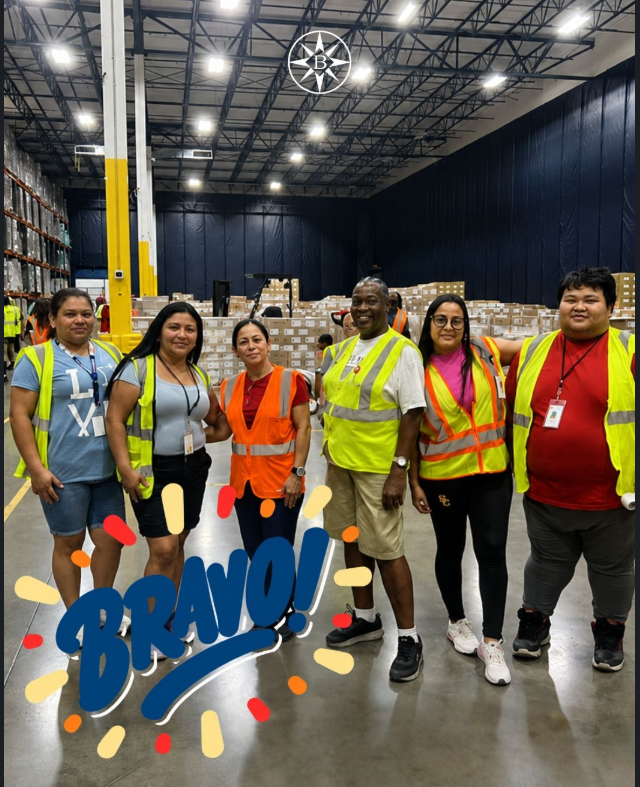
It's often the smallest moments that leave the biggest impression. Not the major milestones or company-wide announcements, but the everyday acts of teamwork that happen without expectation of recognition. A teammate stepping in to help. Someone taking ownership of a challenge before it affects anyone else. An employee going out of their way to support a coworker simply because they know it's needed. These moments rarely come with applause, yet they shape the culture of a workplace in ways that are impossible to measure. They create trust, strengthen relationships, and remind us that behind every successful operation are people who care about the work they do—and about each other. The Moments That Matter Most Are Often the Ones No One Sees Recognition has a way of changing how people feel about the work they do—not because they're looking for praise, but because everyone wants to know their efforts make a difference. In fast-paced environments like logistics, it's easy to move from one task to the next without pausing to acknowledge the people making those tasks possible. The work doesn't stop, deadlines don't wait, and there's always another order to fulfill. Yet it's often in the middle of that fast pace that the strongest examples of teamwork emerge. A coworker notices a potential issue before it reaches a customer. Someone steps in to help a teammate who's fallen behind. An employee takes ownership of a challenge without being asked because they know the success of the team depends on everyone pulling together. None of those moments may seem extraordinary on their own, but together they create something much bigger. They build trust between teammates, reinforce a culture of collaboration, and remind people that their contributions—no matter how big or small—have an impact. Those are the moments that shape an organization long after the workday is over, and they're exactly the kind of moments that deserve to be recognized. A Strong Culture Is Built One Moment at a Time Culture is often described as something organizations create, but in reality, it's something people build together every day. It's reflected in the way teammates support one another, the pride they take in their work, and the willingness to step in when someone needs help. Those interactions may seem ordinary in the moment, but over time they become the foundation of a workplace where people feel respected, valued, and connected to a shared purpose. Creating that kind of environment doesn't always require sweeping initiatives or formal recognition ceremonies. More often, it's the simple gestures that leave the greatest impression—a genuine thank you after a challenging day, a manager taking the time to recognize someone's effort, or a coworker acknowledging a job well done. Those moments remind people that their work is seen, their contributions matter, and the effort they put in each day has an impact beyond the task in front of them. Recognition has a way of creating momentum. When appreciation becomes part of the culture, people are more likely to encourage one another, celebrate each other's successes, and look for opportunities to lift those around them. Over time, that spirit of collaboration becomes contagious, strengthening not only individual teams but the organization as a whole. Creating a Culture Where Appreciation Is Part of the Everyday Earlier this year, Barrett introduced BRAVO, an employee recognition program built around a simple idea: appreciation shouldn't be reserved for annual reviews or major milestones. The program encourages teammates to recognize one another in real time for demonstrating Barrett's core values, stepping up to help others, solving problems, or simply making a positive impact on the people around them. While BRAVO is represented by a recognition card, it's really about something much bigger. It's about creating an environment where people notice the good happening around them and take the time to acknowledge it. Because when appreciation becomes part of the culture, recognition stops feeling like an event and starts becoming a habit. Why It Matters Beyond Our Walls Employee recognition is often viewed as an internal initiative, but its impact extends far beyond the people receiving the recognition. The way employees feel about their workplace inevitably influences the way they approach their work, their teammates, and ultimately the customers they serve. When people feel appreciated, they're more likely to take ownership of the details that matter. They communicate openly, collaborate naturally, and step in when challenges arise because they know they're part of something bigger than themselves. That sense of pride can't be manufactured—it's cultivated over time through a culture where people feel seen, respected, and empowered to make a difference. For our customers, those moments may never be visible, but their impact certainly is. It's reflected in the care that goes into preparing every order, the commitment to getting things right, and the teamwork that happens behind the scenes to deliver the level of service our customers have come to expect. At Barrett, we believe exceptional customer experiences begin long before a package leaves the warehouse. They begin with people who care about the work they do, the teammates they work alongside, and the customers who depend on them. That's why recognizing those everyday contributions isn't just about celebrating our employees—it's about reinforcing the culture that helps us serve our customers better every single day. Celebrating the People Behind Every Success  As I thought about what BRAVO represents, I realized it's about much more than recognition. It's about paying attention. It's about noticing the teammate who stayed late to lend a hand, the employee who found a better way to do something, or the person who made someone else's day just a little easier. Those moments may seem ordinary in the moment, but over time they become the foundation of something much bigger. They become culture. At Barrett, BRAVO is one way we celebrate those everyday moments and the people behind them. Because while logistics is built on systems, strategy, and operational excellence, it's people who bring those things to life. And that's always worth recognizing.
By Faith Artieda August 24, 2026
Spend enough time inside a warehouse and you quickly learn that no two businesses move quite the same way. Products are different, customers are different, expectations are different, and even two brands selling similar items can require completely different approaches once their products reach the warehouse. That reality came through clearly when Bryan Corbett , Vice President of Sales and Marketing at Barrett Distribution Centers, sat down with Nathan Chaney of the Supply Chaney Podcast inside Barrett's facility in Forney, Texas. Bryan has spent 25 years in supply chain, but his perspective is shaped by something more personal than years in the industry. Long before joining Barrett, he was running his own warehouses, unloading trucks, creating barcodes, managing inventory, and figuring out how to get products to customers while building his own businesses. Today, that experience influences the way he thinks about what companies actually need from a 3PL. And throughout the conversation, one idea continued to surface: the best partnerships happen when you understand what a business is trying to become, not simply what it needs today. Knowing Who You Are Matters There is a certain confidence that comes from knowing what you do well and not trying to be everything to everyone. For Barrett, that means understanding the kinds of businesses where its experience can make the greatest difference. Bryan described Barrett as a third generation, family owned 3PL with decades of experience and a network spanning key markets across the United States. But the more interesting part of the conversation was not the size of the network. It was what happens inside it. Barrett works with businesses at different stages of their journey, including established companies and growing brands that have reached a point where what worked before may no longer be enough. Bryan described Barrett as a "level up partner," a phrase that came from the way customers themselves have described the relationship. That transition can happen for many reasons. A brand may be entering retail for the first time, managing more products, expanding across the country, or simply realizing that its current setup cannot comfortably support where the business is headed. Whatever brings a company to that point, growth tends to introduce new questions. Barrett's role is to help customers work through those questions without losing sight of what made their brand successful in the first place. Not Every Customer Needs the Same Answer Walk through Barrett's Texas facility and the idea of customization becomes much easier to understand. As Bryan pointed out during the conversation, multiple customers can operate under the same roof while using distinctly different setups because their businesses require different things. That willingness to adapt is especially important for brands with requirements that fall outside a standard pick, pack, and ship model. Some customers need specialized kitting. Others have unique retail requirements, personalized orders, or packaging that needs to feel unmistakably theirs. Bryan shared one example involving a customer preparing for a runway event in Miami. Barrett's team assembled roughly 400 kits containing approximately 70 individual items each in only a few days. It is the kind of project that does not fit neatly into a standard process, and that is exactly the point. As Bryan explained, Barrett is willing to embrace the work that can be difficult to standardize. That flexibility gives brands room to remain themselves as they grow. They should not have to strip away the details that make their customer experience special simply because their business has become larger. Experience Still Counts Technology has changed warehouses dramatically, and it will continue to do so. Bryan and Nathan talked about robotics, warehouse software, automation, and the constant stream of new tools entering the industry. But Bryan offered a perspective that is easy to lose in the excitement surrounding new technology. New does not automatically mean better. Barrett evaluates technology based on whether it genuinely improves the work being done rather than adopting something simply because it is the newest option available. Some customer environments benefit from robotics. Others are better served by a more hands on approach. The answer depends on the work, the products, and the people involved. Bryan summed up that philosophy through an observation that has stuck with him: “It turns out humans are pretty good at things.” It is a simple statement, but there is a lot behind it. Technology can make people faster, provide better information, and take repetitive work off their plates. What it cannot replace is the judgment that comes from experience. Barrett has team members who have spent 15 or 20 years with the company. That history matters because when something unusual happens, there is value in having people around who have seen difficult situations before and know how to respond. A Partnership Should Feel Personal Perhaps the most human part of Bryan's conversation had very little to do with warehouses at all. Choosing a 3PL requires an enormous amount of trust. A company is handing over products it has spent years developing and a portion of the experience it has promised its customers. For larger businesses, that decision can affect a significant part of the company. Bryan does not take that lightly. “I don't hand off. I'm friends with my clients. Not just friends with them, I want them to succeed.” That line says a lot about how Barrett views partnership. Winning someone's business is only the beginning. The real work comes afterward, when plans change, challenges appear, opportunities arise, and both teams have to figure out what comes next. It also explains why Barrett talks so openly about the brands it serves. Celebrating a customer's growth, sharing their products, or helping introduce their story to a larger audience may not appear in a traditional description of what a 3PL does, but it reflects something deeper about the relationship. When customers succeed, Barrett succeeds with them. Built for What Comes Next Toward the end of the conversation, Bryan made a statement that captures the heart of Barrett's approach: “We only grow when other companies grow with us.” There is something refreshingly simple about that idea. A lasting 3PL relationship should never feel like two companies moving in separate directions. As a customer's business changes, the conversations change with it. New channels emerge, order volumes increase, products evolve, and opportunities appear that may not have existed when the partnership began. Barrett's job is not to make every customer fit the same mold. It is to understand what makes each business different and bring the experience, people, space, and technology needed to help that business move forward. After more than 80 years in business, Barrett has seen plenty change. Technology will continue to advance, customer expectations will continue to rise, and the way products move will undoubtedly look different in another decade. What remains remarkably consistent is the value of having experienced people who care about the outcome. Because at the end of the day, a warehouse is only part of what a company is choosing when it selects a 3PL. It is choosing the people who will stand behind its products, solve problems when they arise, protect the details its customers care about, and hopefully still be there as the business enters its next chapter. For Barrett, that is what partnership is meant to look like.
By Faith Artieda August 24, 2026
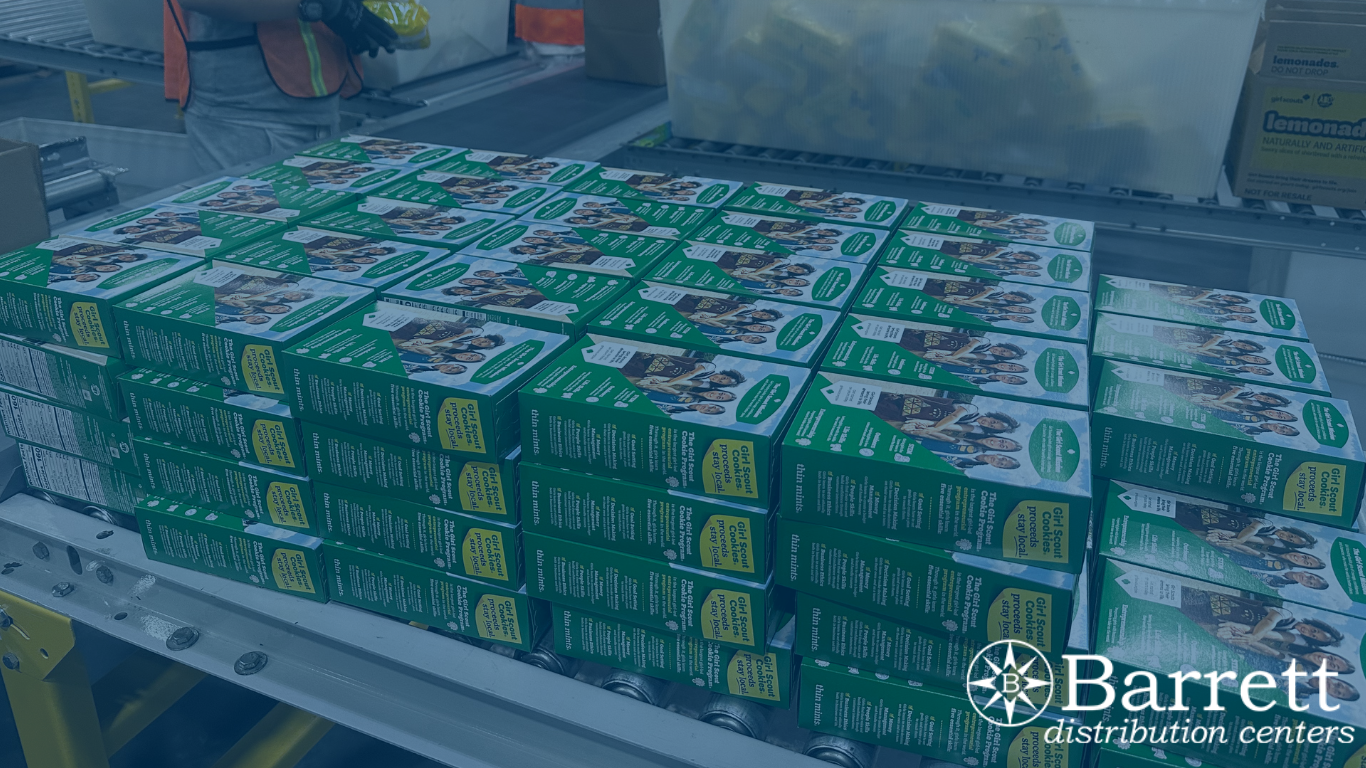
For millions of people, Girl Scout Cookie season means one thing: stocking up on your favorites before they're gone. For the Barrett team? It means peak season in full swing. Behind every box of Thin Mints, Samoas, Adventurefuls, and Tagalongs is a carefully coordinated logistics operation that ensures cookies arrive where they need to be—accurately, on time, and ready to delight customers across the country. It's More Than Cookies Girl Scout Cookie season is one of the most recognizable seasonal programs in the country, but it's also one of the most demanding from a logistics perspective. High order volumes. Tight timelines. Thousands of shipments. Every order matters. That's where Barrett comes in. This season, our team fulfilled more than 416,000 orders and shipped over 2.6 million units , helping keep one of America's favorite traditions running smoothly. That's a lot of cookies...and an even bigger team effort.
More Posts